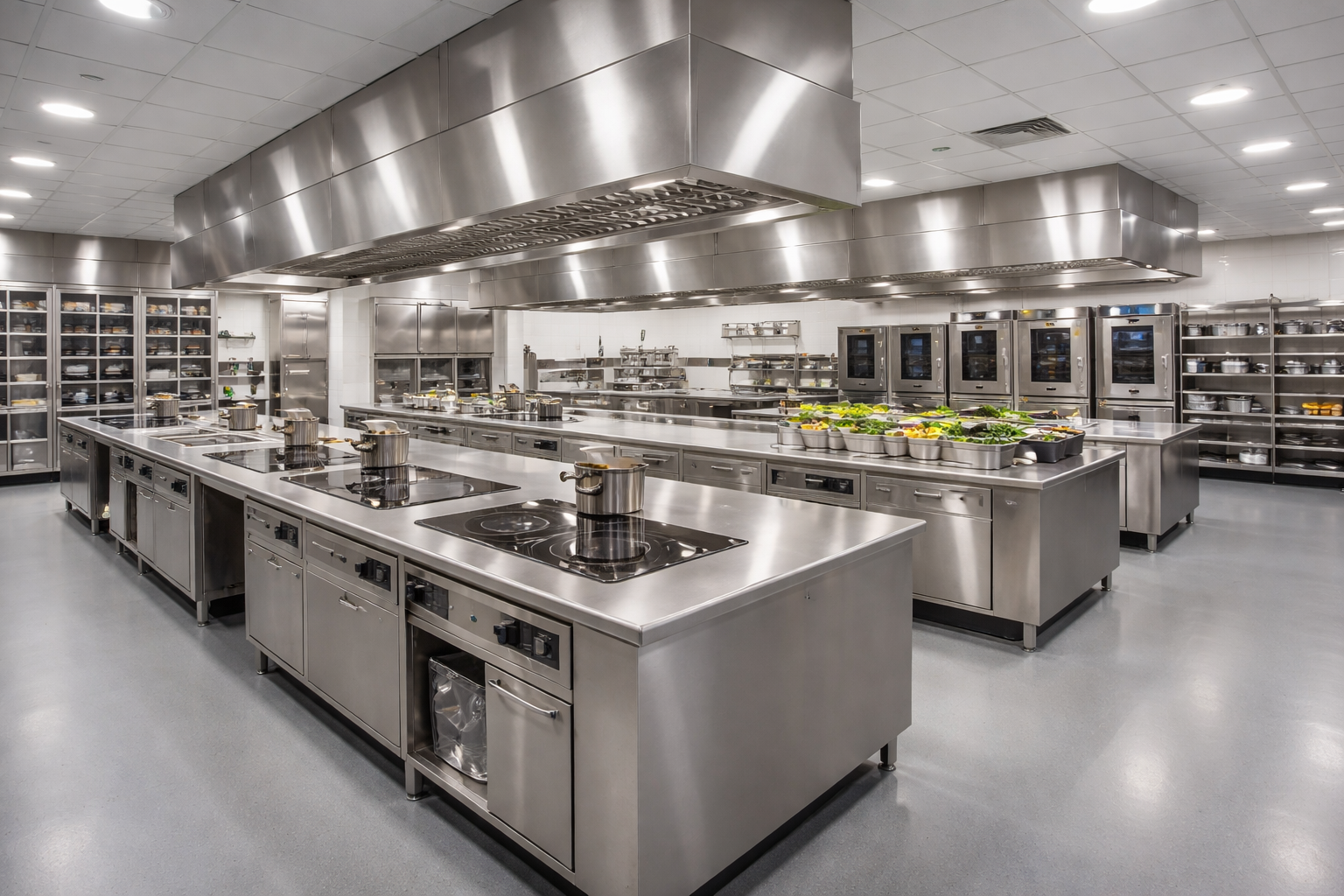
Why Turnkey Catering Projects Reduce Risk
Catering projects involve multiple disciplines working together under tight timeframes and regulatory requirements. Design, equipment specification, installation, and commissioning must all align precisely to deliver a functional and compliant operation. When these stages are fragmented across multiple suppliers, project risk increases significantly.
Turnkey catering projects reduce this risk by placing responsibility for the entire process under a single, coordinated structure. This approach improves control, accountability, and operational reliability from concept to completion.
What Is a Turnkey Catering Project?
A turnkey catering project is delivered by one accountable partner who manages every stage of the project lifecycle. Instead of coordinating separate designers, equipment suppliers, installers, and contractors, the client works with a single project lead.
A typical turnkey scope includes:
Operational and technical planning
Kitchen and service area design
Equipment specification and supply
Installation and coordination with building services
Testing, commissioning, and handover
Post-installation support
This unified structure is designed to reduce complexity and eliminate gaps between project stages.

Reduced Coordination and Communication Risk
One of the most common causes of failure in catering projects is poor coordination between parties. When design decisions are made without installation input, or equipment is supplied without full understanding of site conditions, problems emerge on site.
Turnkey delivery reduces this risk by:
Centralising communication through one project team
Ensuring design decisions reflect installation realities
Aligning equipment specification with available services
With fewer handovers between parties, there is less room for misinterpretation, delay, or error.
Single Point of Accountability
In traditional project structures, responsibility is often fragmented. When issues arise, it can be difficult to identify who is accountable—designers, suppliers, or installers.
Turnkey catering projects remove this ambiguity. A single partner is responsible for:
Technical accuracy
Programme delivery
Budget control
Overall performance of the finished kitchen
This clarity accelerates decision-making and ensures problems are resolved efficiently rather than being passed between contractors.
Better Cost and Programme Control
Budget overruns and programme delays are common risks in catering projects, particularly when scope gaps appear during installation. Turnkey delivery helps control both cost and time by integrating planning from the outset.
Benefits include:
More accurate cost forecasting
Early identification of technical constraints
Reduced variation orders during construction
Realistic installation and commissioning schedules
By aligning design, procurement, and installation under one framework, unexpected costs and delays are significantly reduced.
Improved Technical Integration
Catering equipment must integrate seamlessly with mechanical, electrical, and ventilation systems. When these elements are designed or delivered separately, compatibility issues often arise.
A turnkey approach ensures:
Equipment specifications match available utilities
Ventilation and fire safety systems are correctly sized
Layouts support safe and efficient workflows
This level of technical coordination reduces the risk of rework and ensures the kitchen operates as intended from day one.
Reduced Risk During Live Operations
Many catering projects are delivered within live environments such as hotels, workplaces, or institutional facilities. Poor sequencing or unplanned shutdowns can disrupt operations and damage revenue.
Turnkey projects allow for:
Phased installation strategies
Careful planning around operational constraints
Clear contingency planning
This structured approach minimises disruption and supports a smoother transition into live operation.
When Is a Turnkey Approach Most Valuable?
While turnkey delivery can benefit any catering project, it is particularly valuable for:
Complex or large-scale facilities
Projects with tight programmes
Live operational environments
Clients seeking predictable outcomes
In these scenarios, reduced risk and improved control deliver clear commercial value.
Conclusion
Turnkey catering projects reduce risk by simplifying responsibility, improving coordination, and aligning every stage of delivery under a single accountable structure. This approach enhances cost control, programme certainty, technical integration, and long-term operational performance.
For clients seeking reliability, efficiency, and predictable outcomes, turnkey delivery offers a proven framework for successful catering project execution.